Traditional Balinese Experiences in Ubud Worth Slowing Down For
Ubud is many things to many people. But underneath the cafes and the yoga studios and the wellness menus borrowed from other traditions entirely, there’s a place with a culture that predates all of it by centuries. You can spend a week in Ubud and barely touch it, or you can spend three days and come away with something that stays with you considerably longer.
The traditional Balinese experiences in Ubud worth looking for are rarely the loudest ones on offer.
Start With What Happens Every Morning
Before any tour, any class, any curated encounter, there are the offerings. Canang sari, small palm-leaf trays filled with flowers and rice and incense, placed at doorsteps and shrines and the base of trees by the women of each household, every single morning, as they have been for generations.
You don’t have to go anywhere to see this. Walk outside early and they’re already there. They’re not made for you. That’s the point.
A Temple on the Right Day
Pura Tirta Empul, north of Ubud, gets visited by tour groups every day. Go on a day when the Balinese calendar marks a ceremony and the experience is entirely different: local families in white arriving with offerings, the bathing pools full with purpose, the air thick with incense and the sound of prayer.
The 210-day Saka calendar governs when ceremonies happen, which means the timing is unpredictable from the outside. Ask at your accommodation. Sometimes you get lucky. When you do, stay a while and say very little.
Cooking as a Way In
A cooking class in Ubud that begins at the morning market and ends with a meal you made yourself is one of the more complete cultural experiences available here. Not because it teaches you Balinese cooking exactly, but because the market does something no temple visit quite manages: it puts you inside the texture of daily life, among people doing their ordinary shopping, with someone beside you who can explain what everything is and why.
The galangal, the long pepper, the young jackfruit. The stall where the same woman has been selling the same thing since before the tourism arrived. This is the Ubud that still exists independently of the version built for visitors.
Legong, Watched Properly
Legong dance is performed regularly near the Ubud Palace, and most visitors see it once as part of an evening out. Watching it properly means arriving early, sitting close enough to see the detail of the movement, and giving it the attention it was made to receive.
The training begins in childhood. The precision of the fingers, the angles of the eyes, the layered silk and gold of the costume. None of it is casual or approximate. Watching it as the serious art form it is changes what you take from the room.
Something to Return to
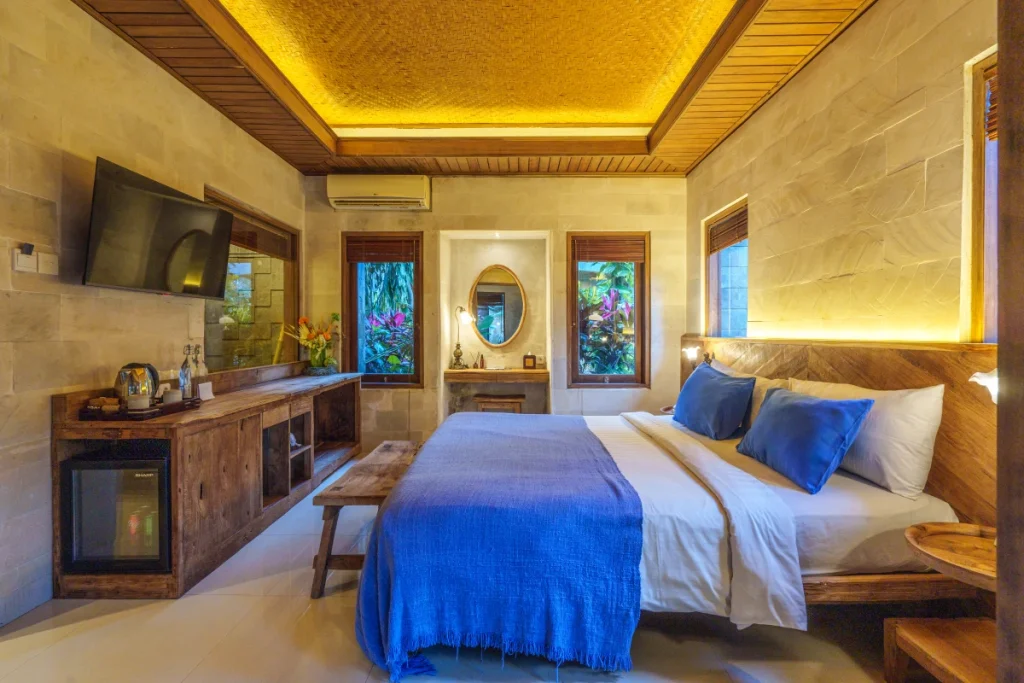
Traditional Balinese experiences in Ubud sit most naturally in a stay that isn’t rushing toward the next thing. Rama Phala Resort & Spa, with its traditional Balinese architecture and courtyard layout, and its position close to the palace, the market, and the cultural venues of central Ubud, is built around exactly this kind of engagement with the place.
For travelers drawn to the traditional Balinese experiences in Ubud that actually go somewhere, it’s a good place to begin and end each day.