Ubud Cultural Experiences: Temples, Dance, and What It All Means
Culture in Ubud isn’t a programme you opt into. It’s the ground the town is built on. The temples, the performances, the daily rituals happening in compounds and on street corners — none of it exists for the benefit of visitors. It was here before the tourists arrived and it continues regardless of whether anyone is watching.
That’s what makes Ubud cultural experiences Bali temples dance so different from what you find in more resort-oriented parts of the island. The immersion is available, but it isn’t manufactured.
The Temples
Ubud and its surrounding villages hold hundreds of temples, from grand complexes with towering split gates to small, moss-covered shrines tucked into rice field walls. Pura Tirta Empul, north of Ubud, is among the most visited: a spring temple where Balinese Hindus come to purify themselves in sacred pools. The ritual bathing here is not a cultural performance. It is an active religious practice, and entering with that understanding changes what you take from it.
Closer to central Ubud, Pura Dalem Agung sits at the edge of the Monkey Forest with a presence that the surrounding greenery only deepens. Temples are most alive on their odalan, the anniversary ceremony that cycles every 210 days in the Balinese calendar. If your visit coincides with one, the sound and colour of it will stay with you considerably longer than your photographs will.
The Dance Performances
Kecak is the one most visitors encounter first. Performed at sunset against a temple backdrop, the chanting of dozens of male voices building and layering over each other is genuinely unlike anything else. The Ramayana story it tells is secondary to the experience of the sound itself, which seems to come from everywhere at once.
Legong is quieter, more intricate. Young dancers trained since childhood move with a precision that becomes hypnotic slowly, over the course of a full performance rather than immediately. The costumes alone, gold headdresses, layered silk, flowers pressed into hair, are worth arriving early to see up close before the lights shift.
Both are performed regularly in central Ubud, often within walking distance of where most visitors are staying.
Why Proximity Makes a Difference
Ubud cultural experiences Bali temples dance works best when it’s woven into the rhythm of a stay rather than scheduled as a series of day trips. An evening performance that’s a ten-minute walk from where you’re sleeping feels different from one that requires a driver each way.
This is part of what central Ubud offers that more remote properties can’t. The cultural life of the town is close enough to move through naturally rather than plan around.
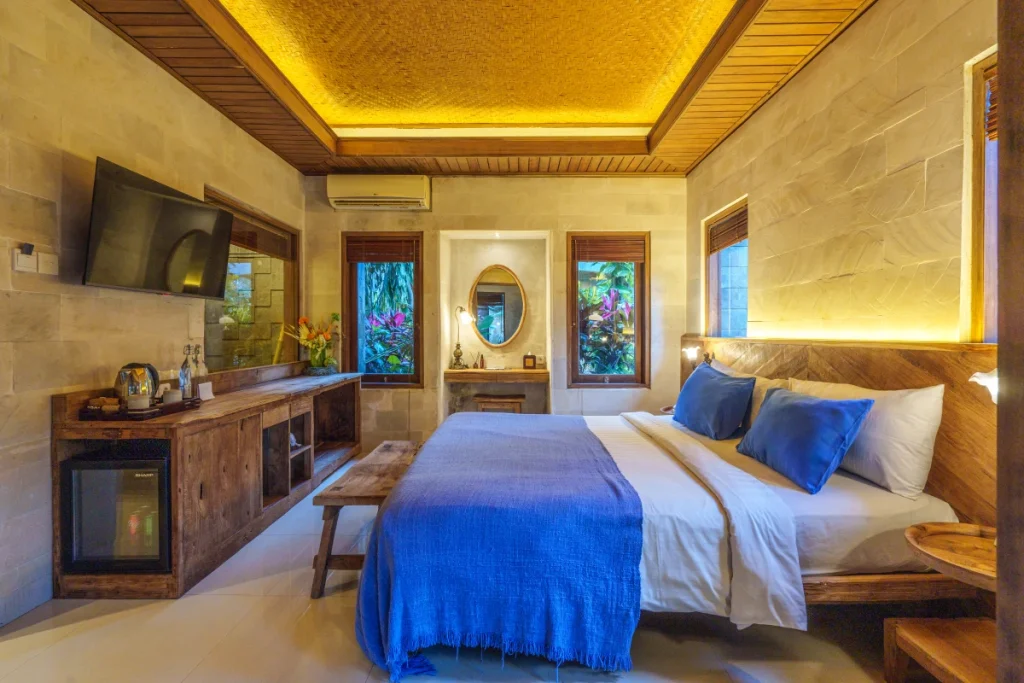
Rama Phala Resort & Spa sits in Pengosekan, within walking distance of the Monkey Forest, the Ubud Palace, and the cultural venues that animate the town most evenings. The property’s traditional Balinese architecture and garden surroundings carry the same aesthetic thread that runs through the temples and performances nearby, so the experience doesn’t reset every time you return to your room.
For travelers drawn to the Ubud cultural experiences Bali temples dance side of Bali, having a base that reflects that same sensibility makes the whole stay feel more coherent.
Rama Phala Resort & Spa is worth considering as that base.